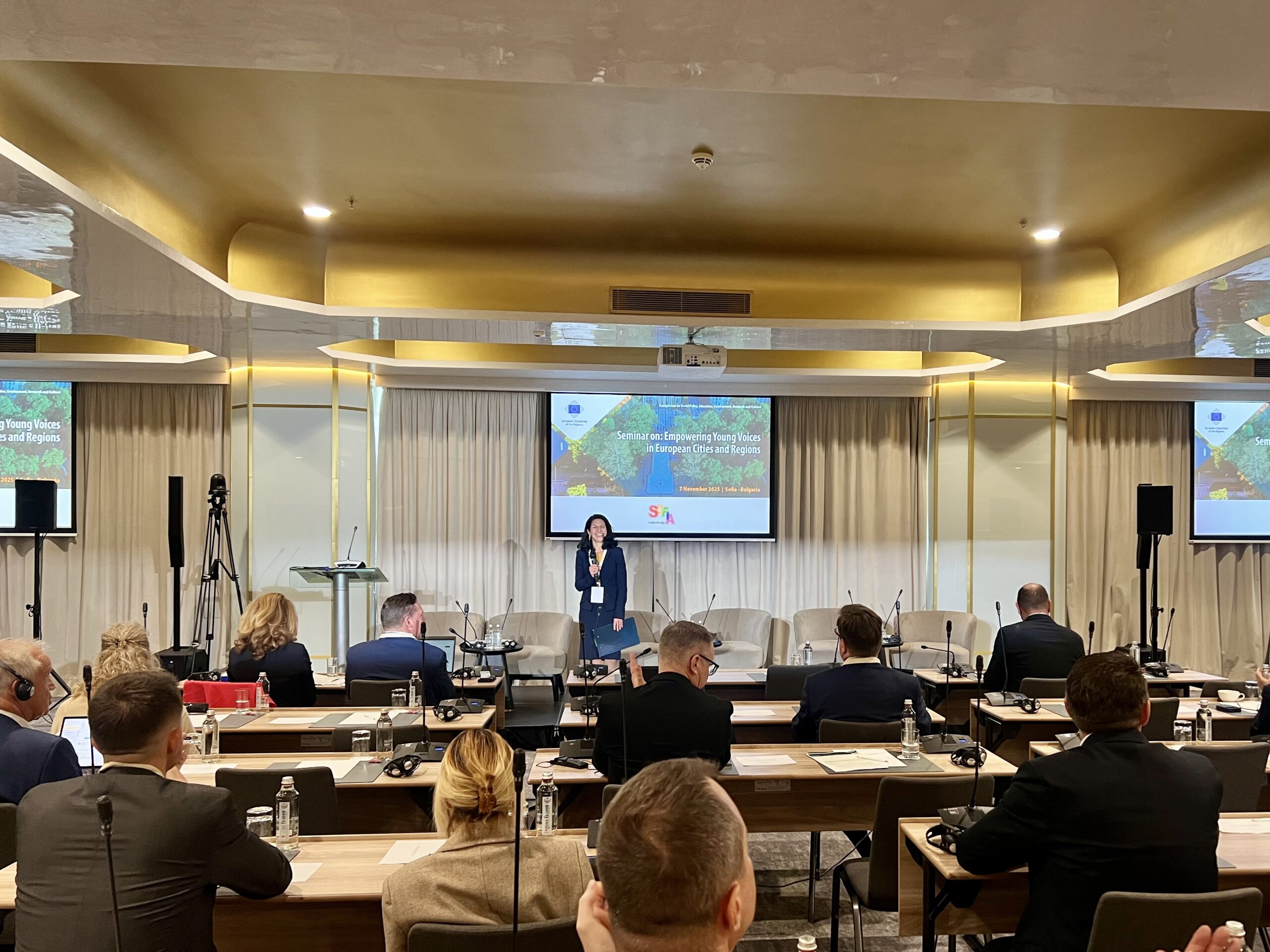
Subnational leaders from all over Europe participated in the European Committee of the Regions (CoR) external seminar and study visits in Sofia, Bulgaria on 6 and 7 November 2025 focusing on youth participation in the EU. The event was hosted by our member, Sofia Municipal Councillor Tsvetelina Simeonova-Zarkin.
Titled “Empowering young voices. European cities and regions and their role in youth participation” the seminar organized on 6-7 November 2025 by the CoR SEDEC Commission (dealing with social policy) brought together local leaders, youth delegates, entrepreneurs, national institutions, and EU representatives for a deep dive into practical strategies for youth inclusion in Europe. “In Sofia, we believe that young people are not just the future. They are already shaping our cities today,” highlighted Bulgarian Municipal Councillor Tsvetelina Simeonova-Zarkin, who hosted the seminar in her city Sofia, where over 30% of residents are under 35 years old. “Empowering them means giving them trust, mentorship, and real opportunities to lead” she highlighted during the 2-day event that also featured study visits to showcase Sofia’s innovation and leading role in empowering young talents.
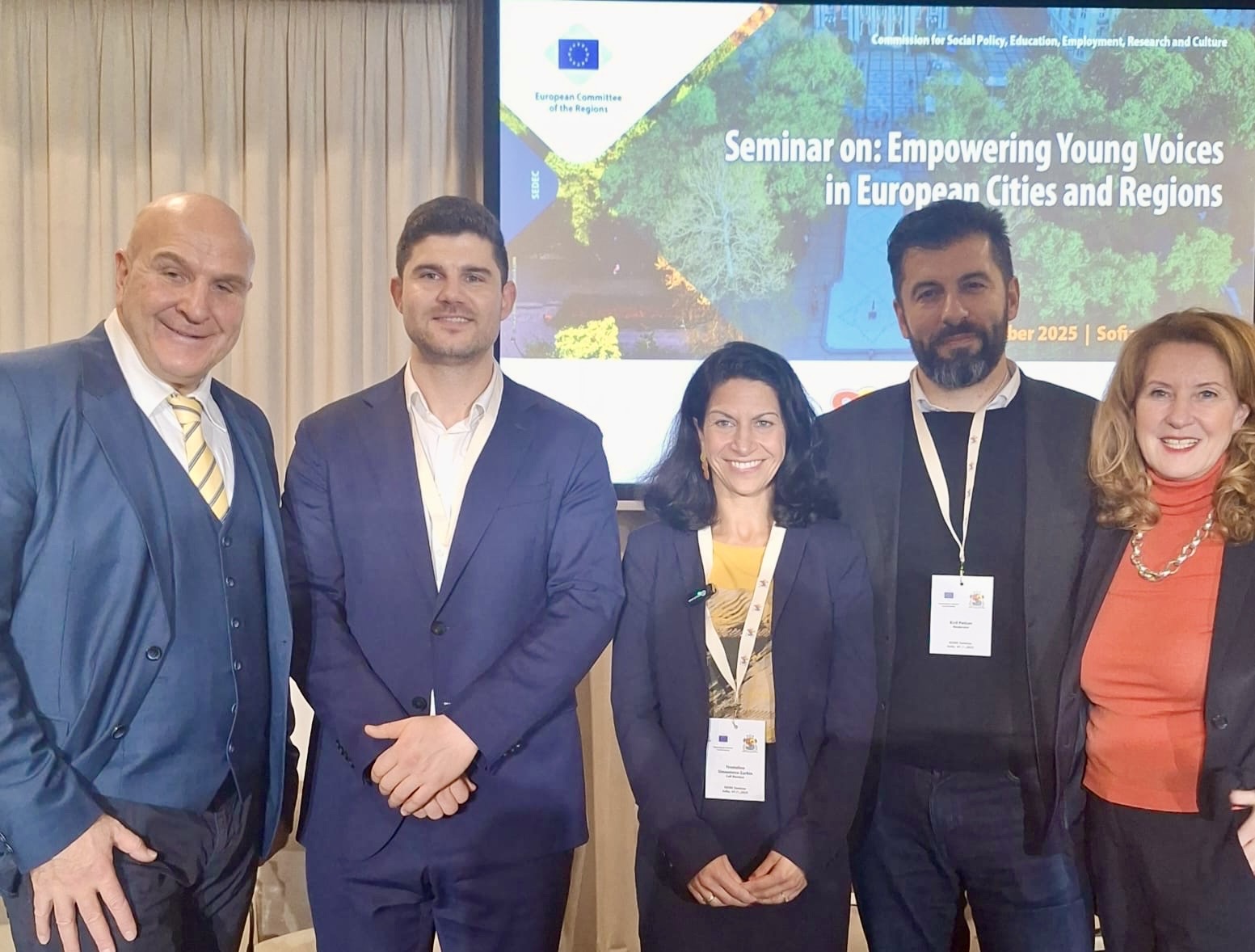
The seminar on 7 November offered a comprehensive look at how cities and regions can empower young people through social support, skills development, and entrepreneurial opportunities. During the first session, panellists explored practical approaches to making the Youth Guarantee effective at local level. As MEP Hristo Petrov highlighted in his opening remarks, the Youth Guarantee, for which he is a Rapporteur in the European Parliament, since 2013 has helped nearly 60 million youngsters in unemployment. In Bulgaria, this level has decreased significantly in recent years, now being at a level lower than the average in the EU. Bulgaria is tackling youth unemployment with a series of initiatives, explained Antoaneta Tsoneva from the Ministry of Labour and Social Policy. Since 2015, municipalities have relied on “youth mediators” – young professionals who share the experiences and language of their unemployed peers, helping them navigate local job markets with notable success. At the same time, the government is supporting nearly 200 social enterprises that hire vulnerable groups, including young people with no prior work experience, offering them a rare foothold in the labor market. Representing the local level, Daniel Nedelchev explained how Sofia’s municipal council is channeling significant support into youth-focused programs through its “Voice of Young People” initiative. The scheme funds student and youth organizations working on social, cultural, educational, and inclusion projects, with 115 initiatives completed last year. About 150 young people under 25 took part, alongside 310 participants in social programs and more than 2,200 volunteers. The panel also included interventions of workers in the field, such as Dilyana Vuchkova, who is helping launch Sofia’s first dedicated youth center and a model for future youth infrastructure in the city. The plan envisions a large facility in the underserved Nadezhda district, designed to support young people through the transition from childhood to adulthood. The center will offer personal development, career guidance, cultural activities, and targeted support for vulnerable and Roma youth through a multidisciplinary team of youth workers, psychologists, mediators, and a career counselor. Another project shown was the Social Teahouse in Varna, which is an enterprise that trains and employs young people who have grown up in institutions and foster homes, as well as vulnerable young women from crisis centers, including survivors of trafficking. Participants learn practical skills such as cooking, baking, and communication, while each is paired with a personal mentor who helps them set goals ranging from learning English to finishing school. The program aims to counter the learned helplessness many institutionalized young people experience, building trust, confidence, and a belief that their past does not define their future. Participants also engaged in a lively discussion on reaching the vulnerable groups in need, cooperating with different stakeholders involved, campaigning on the ground and involving young people in policy-making.
In the second session of the day, panellists discussed fostering innovation ecosystems where young creators and founders can thrive across Europe. Sevdalina Voynova from Sofia’s Municipal Council–founded association described how the city experiments with new models to strengthen its startup ecosystem. Beyond grants, it supports young and women entrepreneurs through social-innovation programs, a municipal guarantee fund that shares risk with banks, and a “sandbox” allowing about ten start-ups a year to test products in real urban conditions. This approach recently helped launch the local metro ticketing app. The city also invests in talent development by offering courses in 17 languages in schools, creating co-working and living-lab spaces, partnering with universities on real-world projects, and nurturing innovation through hackathons. The broader goal, she said, is to fill gaps the market won’t address and ensure that startup growth is inclusive, especially for vulnerable groups. Ognyan Vassilev, local startup founder from Sofia, highlighted the isolation and risk young founders face, often without family support, and argued that success depends on tackling these barriers one by one. Entrepreneurs struggle to navigate a maze of programs, stakeholders, and opportunities, which is what prompted him to map available resources and host a growing annual startup conference that brings together government, investors, corporations, universities, and mentors. With the right coordination, he stressed, all the ingredients are already in place for Sofia to become a global startup hub. Former UN Youth Delegate for Bulgaria, Svetoslava Simeonova, also argued that you cannot build strong local startups without first fixing the gap between education and the future of work. Young people, she said, consistently report that schools aren’t preparing them for modern labor markets and this needs to change. Liberal and democrat subnational voices were present in the room, featuring Jozef Viskupič, Chairman of the Trnava Self-Governing Region in Slovakia, who introduced his draft CoR Report on the EU Startup and Scaleup Strategy and announced that his region will host a seminar on the topic next year. In his presentation, he emphasized three priorities of the report: leveraging the potential of rural areas, decentralizing decision-making to regional and local actors, and ensuring inclusion, particularly for women and youth. Drawing on experiences with innovation forums in Slovakia, he stressed that fostering startups isn’t just about funding or unicorns—it’s about creating supportive ecosystems, promoting ideas, and giving young innovators meaningful participation in shaping policy at all levels. Andres Jaadla from Rakvere, Estonia helped bring the CoR message to a broader audience through an interview with Bulgarian National Radio.
Participants arriving on 6 November joined a study visit to Sofia Tech Park, Bulgaria’s first science and technology park and a major driver of the city’s innovation landscape. The visit showcased how the park brings together research institutions, startups, large tech companies, and public authorities to create an environment where young people can develop skills and transition confidently into emerging industries. During the visit, participants also learned how Sofia Tech Park supports the growth of small and medium businesses by providing know-how and access to new technologies. The following day, after the seminar, participants joined a cultural visit highlighting youth-led and youth-inspired spaces in Sofia. The guided tour by the Kvartal Collective offered participants a fresh perspective on Sofia by highlighting lesser-known neighbourhoods undergoing meaningful revitalisation. The route connected historic sites with new infrastructure projects to show how the city is preserving its cultural identity while adapting to contemporary needs. This on-the-ground experience linked the seminar’s policy discussions to real examples of how young people contribute to Sofia’s cultural life, community building, and the transformation of public spaces.
Supporting the ambitions of young people is a collective responsibility for cities and regions across the EU. Sofia has emerged as a hub where ideas and energy converge to shape a more inclusive and promising future – one in which young people don’t just participate, but drive meaningful change. The event served as an inspiring model for other subnational leaders across Europe on transforming commitments into concrete action.
Watch the recording of the seminar, here.